



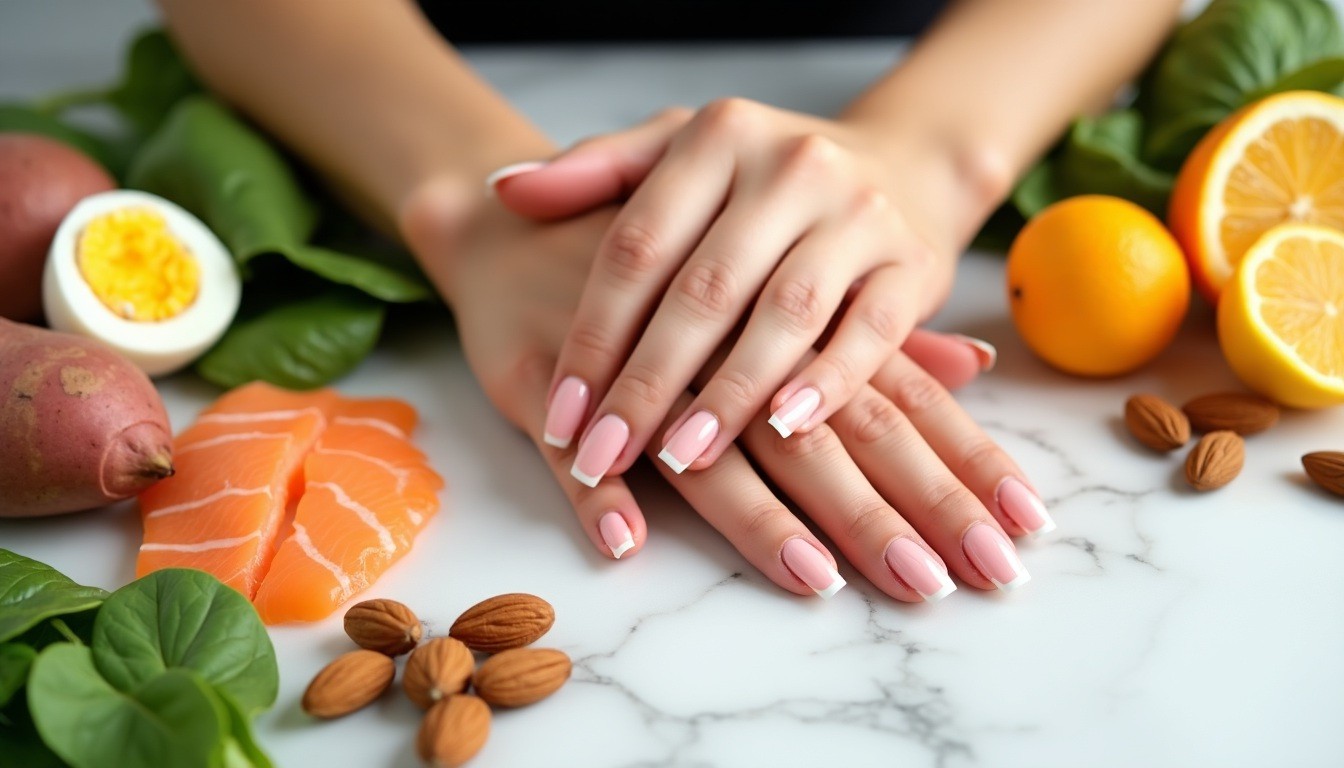
Beautiful, strong nails tell us much more than the latest manicure trends—they reveal our body's overall health. Weak, brittle, or discolored nails might signal nutritional deficiencies that affect your whole body. Your nails need biotin, iron, and vitamins A, C, and E to stay strong and healthy.
Most people with brittle nails don't know their diet holds the answer. Research proves that the right vitamins can make the most important difference in nail health. A study found biotin supplements strengthened nails in 63% of people who had brittle nails. Your nails also show signs of B12 and iron deficiency through vertical ridges or spoon-shaped dips. The solution lies in natural superfoods. Eggs, salmon, sweet potatoes, and spinach provide these vital nutrients that build keratin—the protein that makes nails resilient. This piece reveals the essential vitamins and everyday foods that experts recommend to achieve naturally strong, healthy nails without artificial treatments.
How nutrition affects nail strength and growth
Your daily food choices shape your nails' strength and appearance. Fingernails and toenails have multiple layers of keratin protein that need specific nutrients to grow properly. This connection helps you fix nail problems from their root cause instead of just treating surface issues.
Why nails reflect your internal health
Your nails work as indicators of overall wellness and show visible signs of nutritional deficiencies before other symptoms show up. "Your nails are a very good reflection of your health."
Natural nails reveal nutritional imbalances, unlike artificial ones that hide underlying problems. Your nail health also links closely to your body's overall function. Changes in nail appearance often surface before other health symptoms become noticeable. Regular nail checks give you valuable insights into your nutritional status.
The role of keratin and how it's built
Keratin creates the foundation of nail structure and provides protection. "Keratin is the primary component of hair, so many people believe that taking keratin supplements makes their hair stronger," and these same principles work for nails too. This protein combines many different proteins and enzymes.
Your body creates keratin through keratinization, which relies heavily on protein intake and specific vitamins. "Keratin, which is what nails are composed of, is protein derived and a building block for healthy nails and hair".
These nutrients play a vital role in keratin production:
Protein (especially amino acids)
Biotin (Vitamin B7)
Vitamins A, C, and E
Zinc and iron
Your nail structure weakens without enough of these building blocks, which causes visible changes in how they look and feel.
Common signs of vitamin and mineral deficiencies
Nutritional deficiencies show up through distinct nail changes:
Iron and B12 deficiencies show up as spoon-shaped nails (concave) or vertical ridges. Lack of iron can cause vertical ridges, spoon-shaped nails, pale nails, brittle nails, and discoloration. B12 shortages might turn nails completely blue or create brownish spots.
Biotin shortage makes nails brittle and thin, prone to splitting. This B-complex vitamin helps healthy cell growth and breaks down protein-building amino acids needed for nail growth.
Protein insufficiency makes nails weak and breakable because keratin production lacks its basic materials.
Zinc deficiency creates white spots or damages the nail plate.
Magnesium deficiency shows through vertical ridges in nails.
Vitamin A deficiency results in dry, brittle nails since it helps produce keratin. Nails can become "thin and crooked" without enough vitamin A.
Folate (B9) deficiency causes reddish-brown spots and makes nails rigid.
Vitamin C deficiency reduces nail growth speed and makes them more brittle, sometimes causing reddish-brown spots.
Most occasional nail problems don't signal serious health issues. However, you should see a doctor if persistent changes come with symptoms like fatigue, weakness, or excessive thirst. These visual signs help identify specific nutrient gaps that you can fix through diet or supplements.
Top vitamins and minerals for healthy nails
Nail health and appearance depend on several essential nutrients. Each nutrient plays a unique role to strengthen nail structure from where new cells form to the visible tip.
Biotin: the go-to vitamin for nails
Biotin (vitamin B7) has become known as the beauty vitamin because it helps produce keratin. Research shows that taking 2.5 mg of biotin daily helped improve nail firmness and thickness in 63% of people with brittle nails syndrome after a few months. The participants saw their nail thickness increase by 25%.
Biotin supplements only help people who have a real deficiency. Adults need just 30 mcg daily, and most people who eat a typical Western diet get between 35-70 mcg every day. While biotin deficiency doesn't happen often, pregnancy, long-term antibiotic use, and alcohol can lower biotin levels.
Iron and B12: solving B12 iron deficiency nails
Iron deficiency shows up in nails through vertical ridges, brittleness, and sometimes spoon-shaped dips (koilonychia). This happens because nails need iron to carry oxygen through red blood cells.
B12 works with iron to help form red blood cells. Low B12 can make nails turn bluish-black or develop dark vertical streaks. Men need about 8 mg of iron daily, but women between 19-50 years need much more—around 18 mg.
Magnesium and zinc: underrated but essential
Magnesium helps with over 300 biochemical reactions, including making proteins needed for nail growth. Vertical ridges on nails often point to low magnesium. Men need 400-420 mg daily, while women need 310-320 mg.
Zinc has an even stronger connection to nail health. This mineral helps proteins grow and stay strong. People who don't get enough zinc might notice white spots, slower growth, or thinner nails. In the worst cases, people can lose their nails completely. Men should get 11 mg daily, and women need 8 mg.
Vitamin A, C, and E: antioxidants for nail repair
These antioxidant vitamins team up to protect and fix nail tissue:
Vitamin A helps make keratin and prevents nails from becoming dry and brittle.
Vitamin C helps form collagen, which gives nails their structure and strength. Nails grow slower and break easier without enough vitamin C.
Vitamin E works as a natural nail moisturizer that improves blood flow to the nail bed and guards against damage from the environment. It helps keep nails shiny and prevents yellowing.
These nutrients fix nail problems at their root, unlike fake nails that just cover them up. They make natural nails stronger from the inside out, which leads to lasting improvements instead of temporary fixes.
Superfoods that deliver these nutrients naturally
Whole foods provide a delicious way to improve your nail health naturally. Many everyday foods contain nutrient combinations that target nail strength directly and work better than artificial alternatives.
Eggs, salmon, and lean meats for protein and biotin
Eggs are a triple-nutrient powerhouse that supports nail health with protein, biotin, and vitamin D. A single cooked egg gives you about 10 micrograms of biotin. Salmon packs an impressive mix of omega-3 fatty acids, protein, biotin (17% of Daily Value per 3 ounces), and vitamin D. The unique blend of nutrients in this fatty fish helps prevent nail breakage.
Lean meats like chicken, turkey, and beef give you essential building blocks to produce keratin. Red meat helps fix iron deficiency-related nail issues by providing nearly 2 grams of iron in a 3-ounce sirloin steak. Organ meats, liver in particular, have high biotin levels that strengthen nails.
Leafy greens and legumes for iron and folate
Dark greens such as spinach, kale, and collard greens pack iron, folate, calcium, vitamin A, and vitamin C. These nutrients work together to protect nails from breaking. Spinach helps prevent vertical ridges and brittleness through its iron content.
Legumes and beans pack both protein and iron. Peas stand out with 9 grams of protein and 57 milligrams of vitamin C per cup. This natural combination works well because vitamin C substantially boosts iron absorption.
Nuts, seeds, and avocados for healthy fats and vitamin E
Almonds, walnuts, and sunflower seeds provide biotin, protein, and vitamin E - a perfect trio to support nail health. Sunflower seeds contain zinc that helps nail growth and repair. A single Brazil nut gives you twice the daily selenium needed to prevent nail discoloration and ridges.
Avocados blend vitamin E, vitamin B, folate, and healthy monounsaturated fats. These nutrients keep nails moisturized and strong, which prevents brittleness.
Sweet potatoes and citrus fruits for vitamin A and C
Sweet potatoes contain beta-carotene that your body turns into vitamin A - a vital component to produce keratin in nails. This root vegetable prevents thin, dry, or crooked nails through its vitamin A content.
Citrus fruits like oranges and lemons are rich in vitamin C that helps produce collagen - a structural protein in nails. Bell peppers offer a surprising alternative with one medium pepper containing more vitamin C than you need daily. This antioxidant shields nail cells from damage while helping your body absorb iron from plants.
How to spot and fix brittle nails from vitamin deficiency
Your nails tell a story about your body's nutritional balance. Changes in their appearance serve as warning signs that reveal what nutrients you might lack. Learning to read these signals will help you restore your nail health naturally.
Vertical ridges, peeling, and discoloration explained
Each nail change points to specific nutrient deficiencies:
Vertical ridges signal a lack of magnesium or iron. People with iron-deficiency anemia might notice their nails take on a more severe "spoon" shape (koilonychia).
White spots show up because you don't have enough zinc. Your nail plate starts to break down without adequate zinc levels.
Peeling nails could mean you need more iron, calcium, or B vitamins.
Discoloration gives away important clues. Blue-black pigmentation with dark streaks points to vitamin B12 deficiency. Yellowish nails usually come with overall brittleness.
Brittle, thin nails usually mean you need more biotin. This vitamin helps build keratin, the protein that makes up your nails.
The right way to fix nutrient gaps
Medical experts suggest fixing these deficiencies through food first. Your body absorbs nutrients better from whole foods than from supplements.
Supplements make sense in certain cases: if blood tests show specific deficiencies, you have absorption problems like Crohn's or celiac disease, or you follow a restricted diet.
Biotin supplements work best for nail health. They help about one-third of people with brittle nails after six months. Severe iron deficiency might need iron supplements along with dietary changes.
The hidden risks of artificial nails
Fake nails can hide important nutritional warning signs. The dark, moist space between your real and acrylic nails creates perfect conditions for fungus to grow. This makes nail health even worse.
The artificial nail process damages your nails through:
1. Scratching the nail surface so acrylics stick better
2. Soaking nails in acetone during removal
3. Filing away leftover material
Your nails stay weak and brittle for about six months after this process. This makes any existing nutrient deficiencies even more obvious. People who use artificial nails regularly need to pay extra attention to their nutritional needs.
Conclusion
Strong, healthy nails develop from the inside out - this fact stands out in our study of nail nutrition. Artificial treatments only mask problems, while nutrient-rich foods target the mechanisms of brittle, weak nails. Many prominent beauty experts acknowledge this basic truth and recommend biotin-rich eggs, omega-packed salmon, and iron-loaded leafy greens.
Research strongly backs a food-first approach. A balanced diet naturally delivers biotin, iron, B12, zinc, and vitamins A, C, and E - these are the foundations of resilient keratin structures. People who don't deal very well with vertical ridges, peeling, or discoloration should get into what's on their plates before turning to supplements or fake nails.
These simple meal adjustments need minimal effort but deliver impressive results. Adding spinach to morning eggs, eating nuts as snacks, or including sweet potatoes with dinner creates a detailed nail-strengthening plan. These dietary moves often eliminate the need for costly treatments or cosmetic cover-ups.
Healthy nails show your body's overall wellness clearly. Their appearance gives an explanation of nutritional status that shouldn't be hidden. When nail problems surface, think about them as helpful messengers that guide you toward better nutrition—and you'll ended up with better health. Most people can achieve strong, naturally beautiful nails that complement any style without artificial help by focusing on nail-boosting foods consistently.
FAQs
Q1. What are the best foods for strong and healthy nails?
Eggs, salmon, leafy greens, nuts, and sweet potatoes are excellent choices. These foods are rich in biotin, protein, iron, and vitamins that support nail strength and growth.
Q2. How can I strengthen my nails naturally?
Focus on a balanced diet with foods high in biotin, protein, and vitamins A, C, and E. Stay hydrated, and consider adding more eggs, nuts, and leafy greens to your meals. Avoid harsh chemicals and excessive use of nail polish removers.
Q3. What vitamin deficiencies cause brittle nails?
Brittle nails can be a sign of deficiencies in biotin, iron, zinc, or vitamins B12, A, C, and E. Vertical ridges often indicate iron or magnesium deficiency, while white spots may suggest zinc insufficiency.
Q4. Is biotin supplementation effective for nail health?
Biotin supplements can be beneficial for some people with brittle nails, showing improvements in about one-third of cases after six months of use. However, it's generally recommended to obtain biotin through diet first before considering supplements.
Q5. How do artificial nails affect nail health?
Fake nails can mask signs of nutritional deficiencies and potentially worsen nail health. The application and removal process can damage natural nails, making them weaker and more brittle. It's better to focus on improving nail health through nutrition and proper care.